



ENERGIES 2050 co organised a side event at COP29 under the theme “Innovating for decarbonization to build resilient and sustainable territories in the face of climate change”. Held at the Pavillon de la Francophonie on Tuesday, 12 November 2024, the event was organised by ENERGIES 2050 in collaboration with the Centre International de Recherche et de Renforcement des Capacités (CI2RC), the École Supérieure de Technologie d’Essaouira (ESTE), Cadi Ayyad University (UCA) of Marrakech, and the Réseau Climat et Développement (RC&D).
The decarbonization of territories represents a key lever to address the global challenge of climate change while building resilient and economically viable regions. This event aimed to explore in depth the innovative solutions required for a fair and sustainable energy transition, with particular attention to the realities and constraints of countries in the Global South. Tackling carbon emissions is a multidimensional process that requires close cooperation among a wide range of actors, including national and local authorities, businesses, research institutions and citizens.
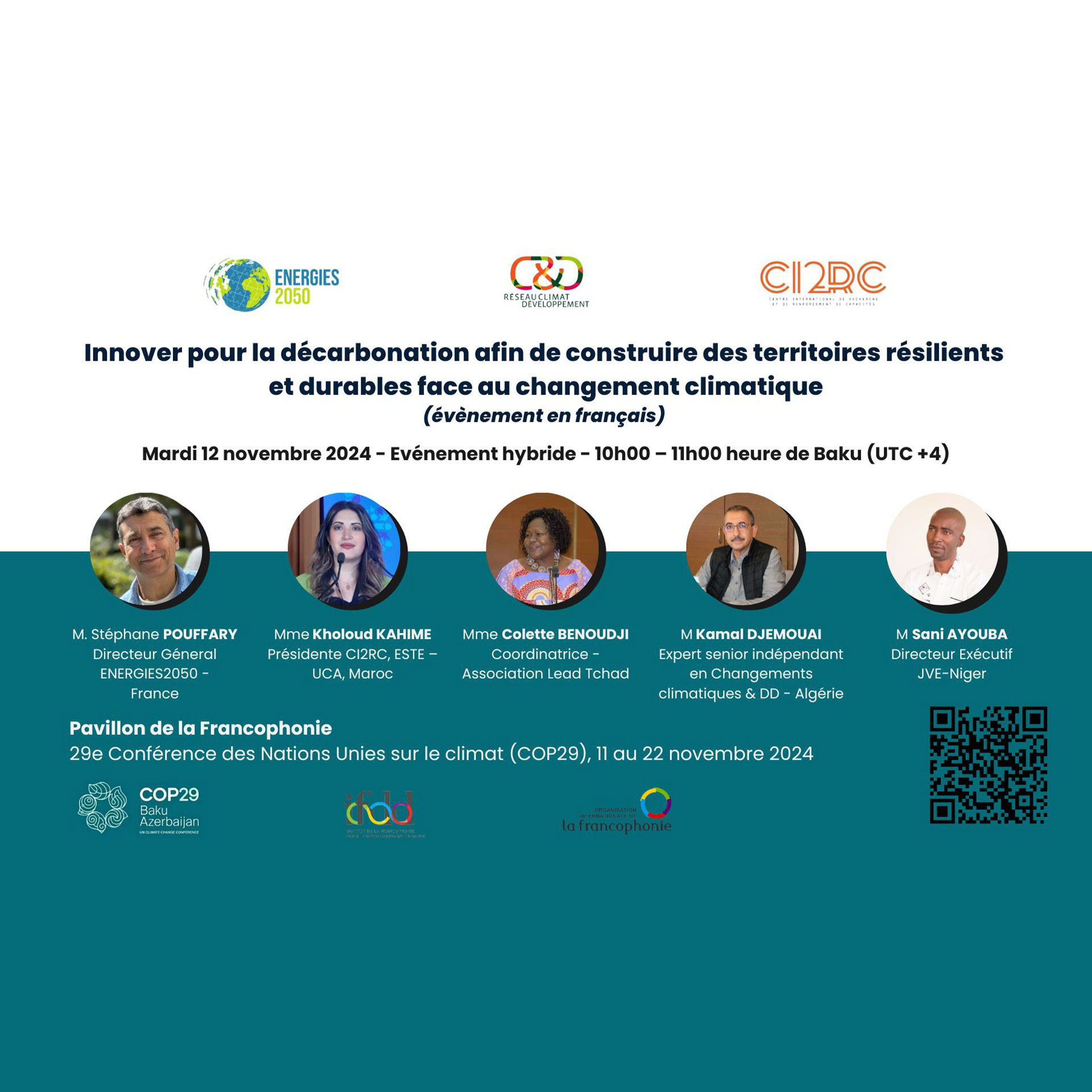
The event opened with a session highlighting the major challenges associated with the decarbonization of territories. This introduction underlined the importance of transitioning towards a decarbonized economy, not only to reduce greenhouse gas emissions, but also to foster innovation, create local jobs and strengthen territorial energy independence. Participants were introduced to how decarbonization strategies can contribute to improved air quality, thereby reducing public health risks, particularly respiratory and cardiovascular diseases.
This was followed by the presentation of concrete case studies and success stories, showcasing projects integrating renewable energy solutions, energy efficiency improvements and the adoption of clean technologies. Speakers explained how such initiatives enhance territorial resilience in the face of energy price volatility and disruptions to fossil fuel supply chains.
The event also addressed the specific challenges faced by countries in the Global South. These territories, often highly dependent on fossil fuels and lacking adequate infrastructure, face complex obstacles in implementing effective energy transitions. Discussions highlighted the importance of public policies and financing mechanisms to facilitate access to renewable energy, as well as the need for capacity building and awareness raising among local populations.
The webinar concluded with a discussion on the essential role of innovation and scientific research. These two levers are key to developing a comprehensive understanding of climate challenges by integrating technical, economic and social perspectives in support of sustainable and resilient strategies. The importance of a participatory approach was also emphasised, engaging local communities and all relevant stakeholders in the planning and implementation of decarbonization projects.


