

ENERGIES 2050 at REDEC 2025: Scaling Up Renewable Energy Communities and Decentralised Energy Access
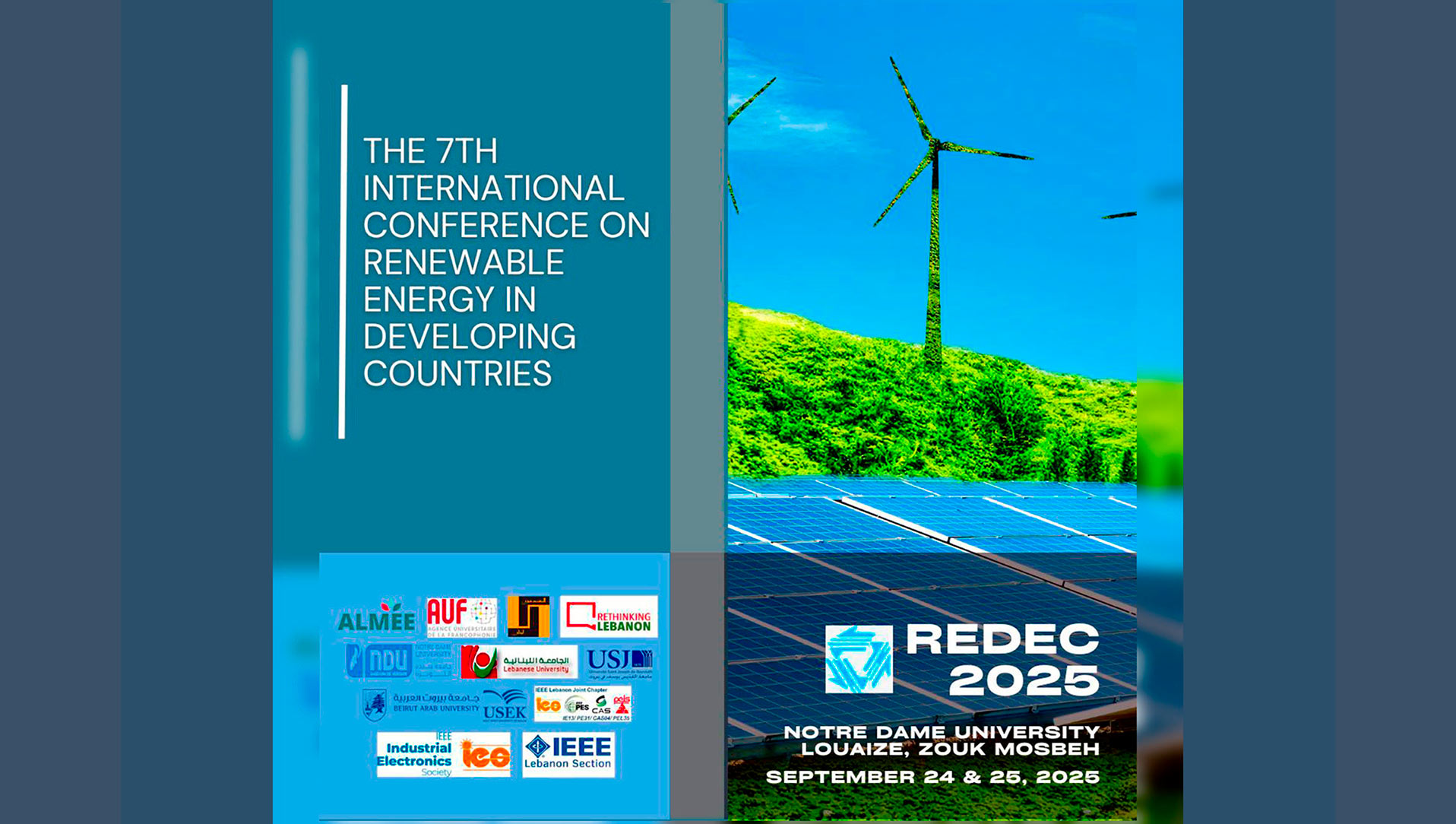
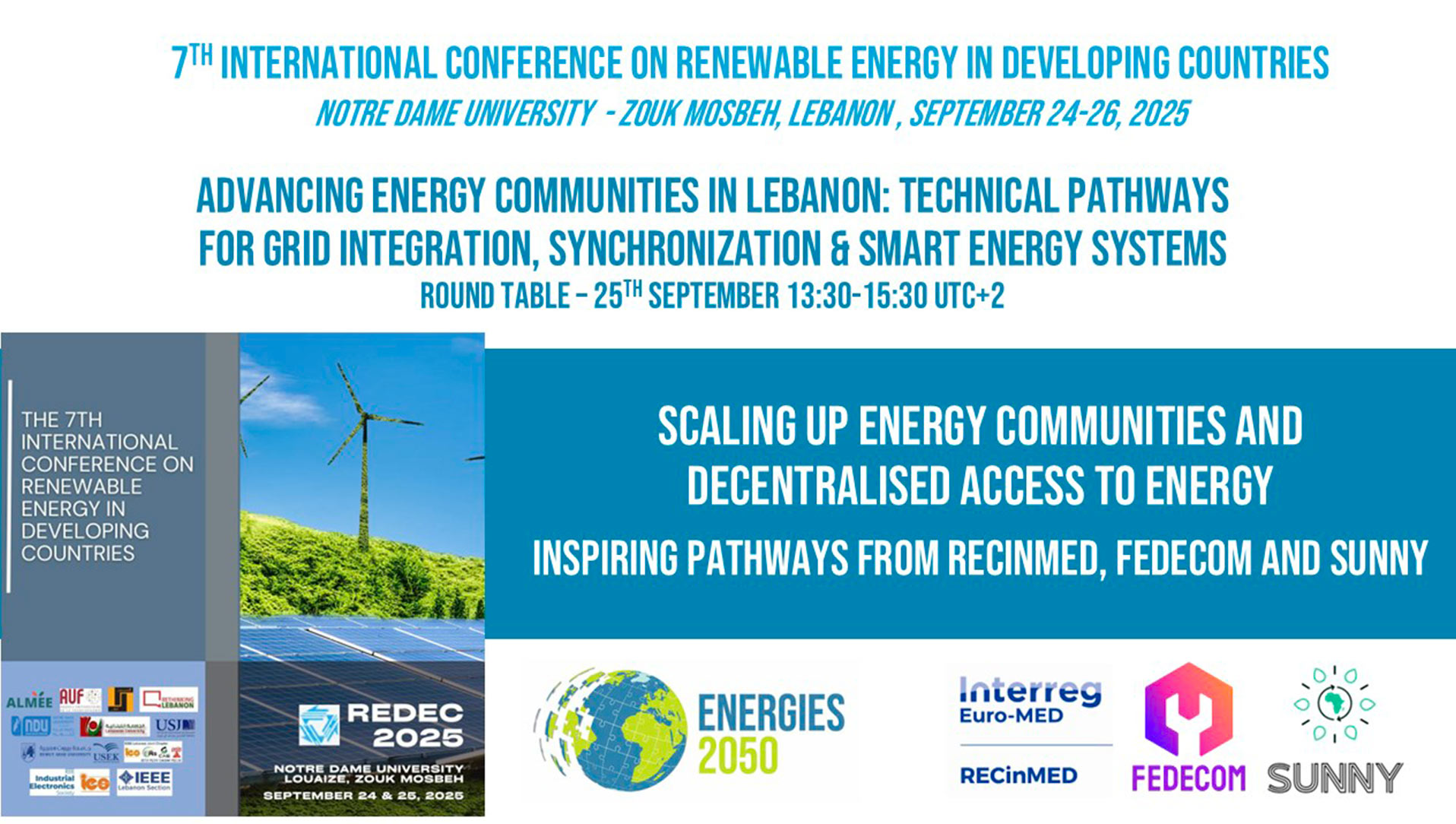
24-26 September 2025 – ENERGIES 2050 took part in the 7th edition of the biannual International Conference on Renewable Energy in Developing Countries (REDEC 2025), held at Notre Dame University – Louaize in Lebanon. During the conference, ENERGIES 2050 presented insights and lessons learned from several European projects supporting the energy transition, including RECinMED, FEDECOM, and SUNNY, funded respectively under the Interreg Euro-MED and Horizon Europe programmes.
Renewable Energy Communities and decentralised energy access are increasingly recognised as a key mechanism to accelerate the energy transition, strengthen local energy resilience and improve access to sustainable energy in regions facing structural energy challenges.
This hybrid scientific conference brought together researchers, experts, policymakers, and community leaders to exchange knowledge and innovative solutions for renewable energy in developing contexts. Discussions focused on technological developments, policy frameworks, and practical approaches to support renewable energy deployment and decentralised energy access.
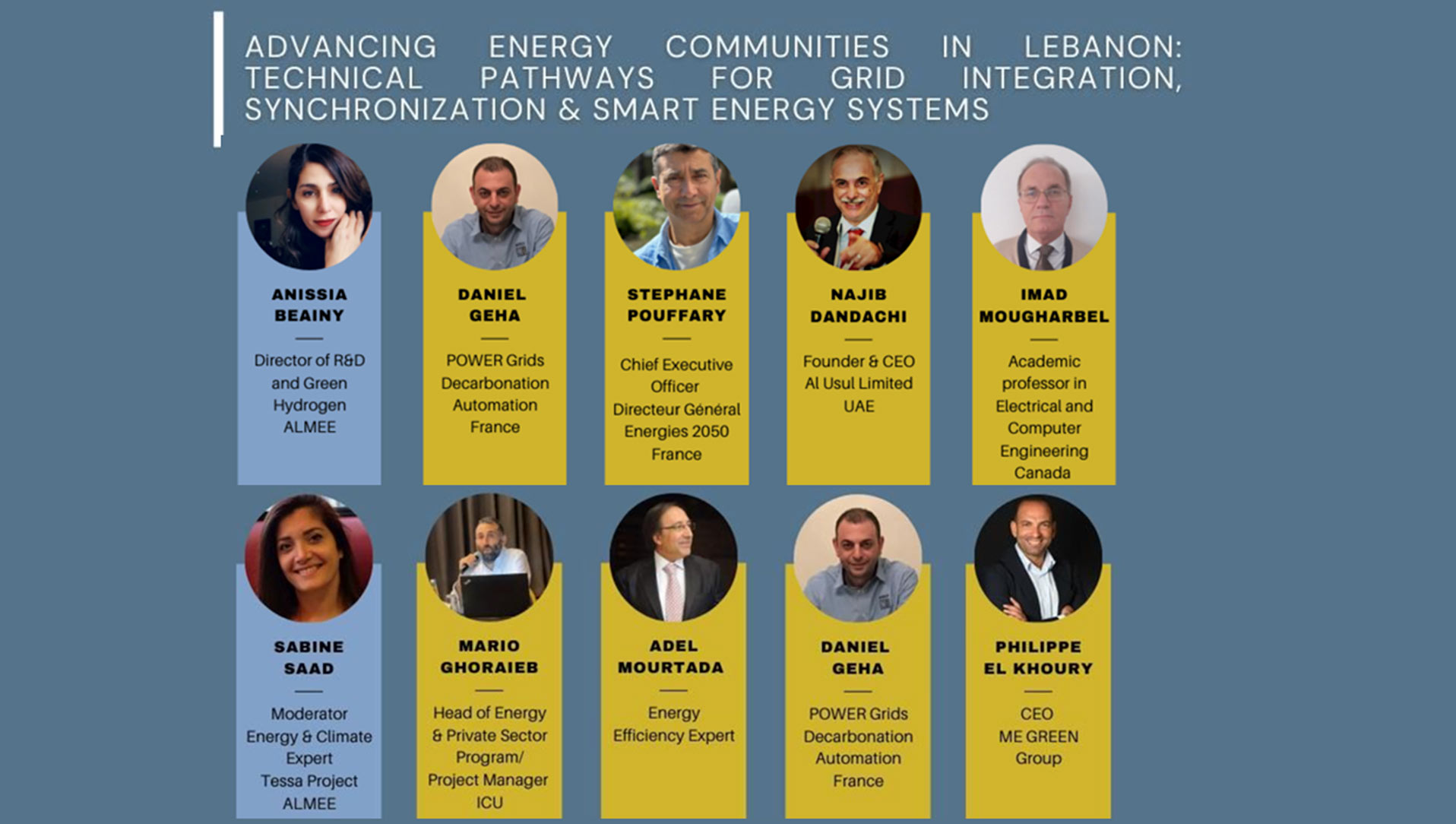
On 25 September, ENERGIES 2050 contributed to the roundtable entitled “Advancing Energy Communities in Lebanon: Technical Pathways for Grid Integration, Synchronisation and Smart Energy Systems.” During this session, our CEO Stephane POUFFARY shared experiences from European initiatives working on Renewable Energy Communities (RECs) and decentralised energy access, drawing on the organisation’s experience across several European cooperation projects.
The presentation, titled “Scaling Up Energy Communities and Decentralised Access to Energy: Inspiring Pathways from RECinMED, FEDECOM and SUNNY” emphasised that Renewable Energy Communities and decentralised energy systems represent a unique opportunity to accelerate the energy transition, provided that enabling legal frameworks and governance structures are in place.
Renewable Energy Communities (RECs) are collaborative models in which citizens, local authorities and organisations jointly produce, manage and share renewable energy. These initiatives contribute to strengthening local resilience, improving energy affordability and fostering citizen participation in the energy transition.
Technical solutions must remain adaptable to diverse contexts, while public authorities, private stakeholders, and consumers each have a fundamental role to play in achieving decarbonisation goals, strengthening local energy resilience, and expanding access to affordable renewable energy.
Among the key questions discussed during the roundtable were the following:
- What lessons from European Renewable Energy Communities – including urban, rural and island cases – are most relevant to Lebanon’s fragmented grid system?
- Based on the experience of RECinMED, what conditions enable rural communities to succeed where traditional utilities are weak or absent?
- How can innovation projects such as FEDECOM, which focus on multi-energy and cross-border energy communities, inspire the development of Lebanese energy communities?
- How could Lebanon connect to international initiatives such as the SUNNY Replication Board and benefit from projects addressing decentralised energy access in refugee-hosting areas?
- How can Mediterranean cooperation help avoid “reinventing the wheel” by building on existing experiences and sharing practical solutions?
Through these discussions, the conference provided an important opportunity to link Mediterranean cooperation, European and African innovation, and the urgent energy needs of Lebanon and the wider region, while strengthening dialogue between researchers, policymakers and local stakeholders.
RECinMED: Building Inclusive Energy Communities in the Mediterranean
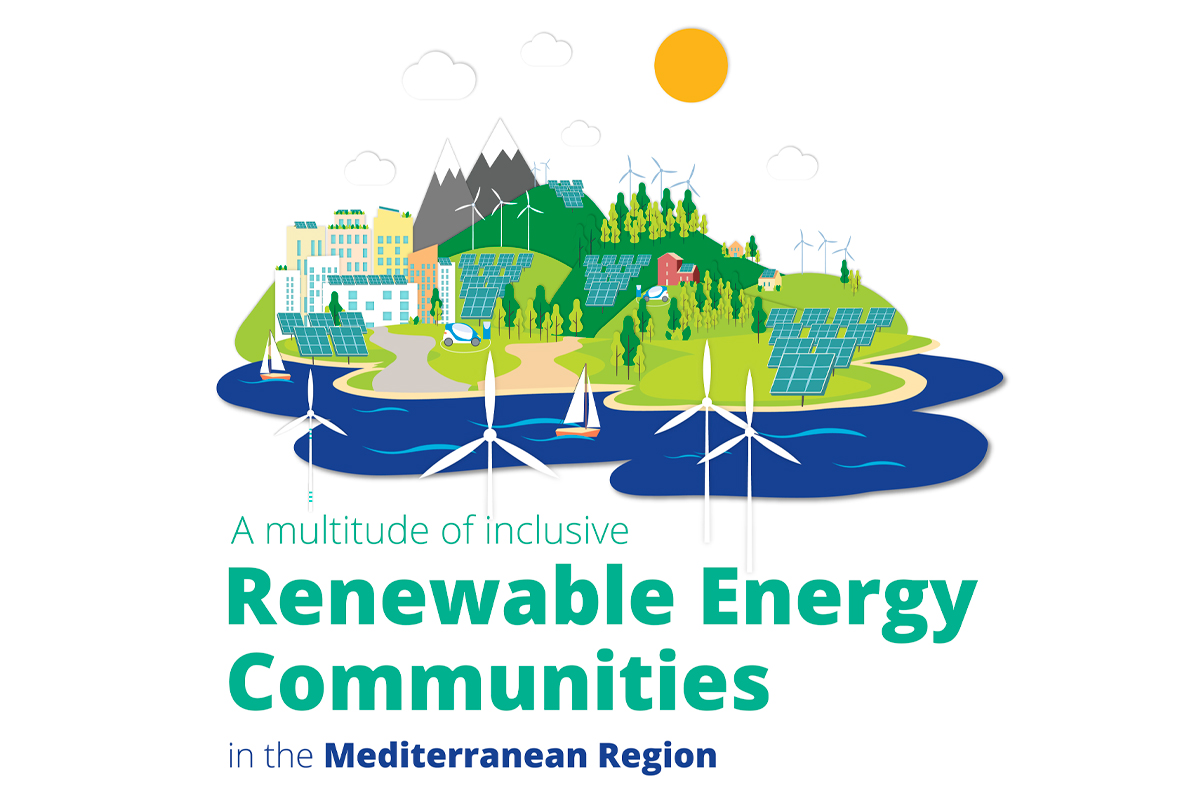
ENERGIES 2050 showcased the RECinMED Interreg Euro-MED project (A multitude of inclusive Renewable Energy Communities in the Mediterranean Region). RECinMED explores solutions adapted to different territorial contexts by testing innovative approaches in urban areas, rural territories and island environments.
These lessons are particularly relevant for Lebanon, where decentralised renewable energy solutions could strengthen local communities, improve resilience in a fragmented energy landscape, and contribute to improving energy security and affordability.
Learn more about the project RECinMED
FEDECOM: Pioneering Multi-Energy and Cross-Border Energy Communities
ENERGIES 2050 also presented the FEDECOM Horizon Europe project (FEDErated “system of systems” approach for flexible and interoperable energy COMmunities), which pioneers a federated “system of systems” approach designed to support flexible, interoperable and scalable energy communities.
During the REDEC roundtable, ENERGIES 2050 explained how FEDECOM’s innovative ecosystem, including a cloud-based platform, predictive tools and large-scale pilot sites across Spain, the Benelux region and Switzerland, can inspire stakeholders working on energy communities beyond Europe.
Participants were also invited to explore the FEDECOM “Follower Communities” initiative, which aims to connect and support external stakeholders interested in replicating innovative energy community models.
Learn more about the project FEDECOM
SUNNY: Decentralised Energy Access for Refugees and Host Communities
ENERGIES 2050 highlighted the SUNNY Horizon Europe project (SUstaiNable eNergy sYstems for refugee and host communities in Africa), a 48-month initiative delivering clean and affordable energy solutions for refugee settlements and host communities in Africa.
SUNNY develops and tests innovative technologies in two pilot sites located in refugee camps and surrounding communities in Uganda (Bidibidi) and Rwanda (Mahama).
During REDEC 2025, ENERGIES 2050 presented the SUNNY Replication Board, an initiative designed to connect external stakeholders interested in scaling up the project’s solutions and sharing knowledge on decentralised energy access.
Lebanon, which hosts large refugee populations and faces significant energy challenges, could benefit directly from SUNNY’s methodologies and experiences. By combining technological innovation with inclusive governance and sustainable financing models, SUNNY provides valuable inspiration for addressing energy access in complex humanitarian contexts.
Learn more about the project SUNNY
Strengthening Cooperation Across Regions
Participation in REDEC 2025 provided a valuable opportunity to strengthen dialogue between European, Mediterranean and African initiatives working on renewable energy deployment and decentralised energy systems, particularly in regions facing energy access challenges, fragile energy infrastructures and increasing climate pressures.
By sharing experiences from projects such as RECinMED, FEDECOM and SUNNY, ENERGIES 2050 contributed to discussions on how collaborative approaches, innovation and knowledge exchange can help accelerate the development of Renewable Energy Communities and expand access to sustainable energy in developing regions.
Through its involvement in international cooperation projects and multi-stakeholder initiatives, ENERGIES 2050 continues to promote collaborative solutions supporting an inclusive and sustainable energy transition. These initiatives demonstrate how Renewable Energy Communities, decentralised energy systems and international cooperation can contribute to accelerating the global energy transition.